Chapter 22 Orthotics and prosthetics
Firas Arnaout
Introduction#
Orthotics and prosthetics is a subject often neglected during revision, but is an important topic because various aspects may be incorporated into other topics, such as gait, hand injuries or amputations.
This chapter attempts to cover the concepts that have been tested previously in the FRCS (Tr & Orth)
exam. The questions and answers provide a high-order thinking framework to build on your answer in the exam oral tables.
Candidates are likely to be shown a clinical photograph, followed by a starting question. You are not normally marked on the starting question – it serves to melt the ice and give you confidence to get going.
This will be followed by a competency question, which is a pass–fail benchmark. Once achieved, the examiners will then move on to advanced questions to give you higher scores.
Remember that examiners are looking for a logical and confident approach, testing your higher-order thinking in the application ande valuation of clinical knowledge.
Learn to draw as you talk, this will assist the examiners to understand what you are drawing, especially if your artistic skills are not the best! It will look and feel very awkward to draw silently while examiners are looking at you! Talking while drawing will also save you time and make you look more confident about the topic.
The topics discussed within this chapter are interchangeable, and answers can bemixed according to the scenarios given. Therefore, agility and the ability to adapt your answer to the specific question asked is an essential skill for the FRCS exam, and this is best mastered through repeated practice with other exam candidates and consultants.
Candidates can also be asked about orthotics and prosthetics in both the MCQ and clinical components of the exam. This chapter also helps to cover the knowledge and skills required for these parts of the exam.
Orthotics#
[Hands the candidate a picture of an orthosis] What is an orthosis?
The definition that is endorsed by the International Society for Prosthetics and Orthotics is a device that is externally attached to the body to improve function. It supports weak muscles and corrects or compensates for skeletal deformity.
What are the ideal characteristics of an orthosis?
The ideal orthotic should bee ffectiv e, lightweight, cosmetically acceptable, easy to put on and take off, and comfortable.
What are the different types of orthotics that you know of? Can you give me examples of each?
Orthoses can be classified according to function in to corrective and accommodative. The corrective ones tend to be hard. They limit joint motion and stabilize flexible deformities. An example is the rocker sole that can lessen the bending forces on an arthritic ors tiff mid foot during the midstance as the foot changes from accepting the w eight-bearing load to pushing off. It is also useful intreating meta tarsalgia and hallux rigidus. The accommodative ones tend to be soft to allow them to shock-absorb and to accommodate fixed deformities, such as various pressure-relieving insoles that are used to dissipate local pressures over bony prominences to treat diabetic foot. Sometimes the same orthotic can be used for support and/or correction. An example is the TLSO, which can be supportive in the case of fractures or corrective in the case of idiopathic scoliosis. Another example is the AFO, which can be supportive for weak muscle in polio or corrective in cerebral palsy.
What different materials are used to make orthotics?
Orthotic materials need to belight, strong and sufficiently hard-wearing to survive for the duration of their intended use. Various materials can be used, such as metal, plaster of Paris, carbon fibre, silicone, leather and plastic.
[Shows a photo] Can you tell me what this orthosis is made of and the different types of this material that can be used to make an orthosis (Figure 22.1b)?
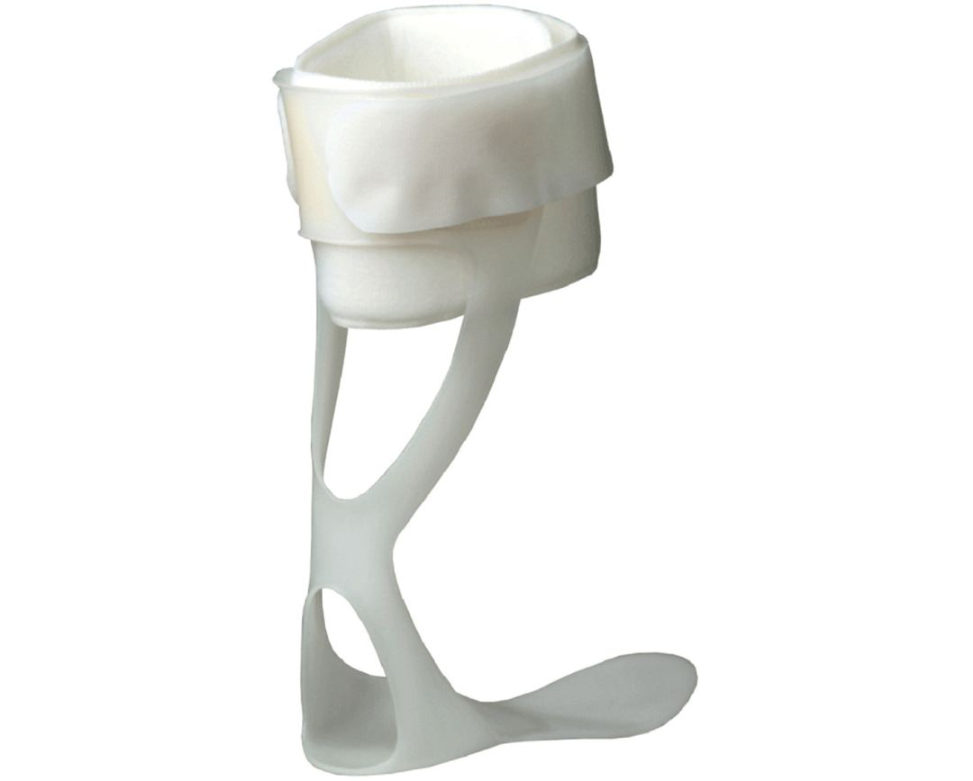
This is made of plastic Plas tic can be thermoseting or thermo forming. Thermoseting plastics are pliable above a certain temperature and return to solid upon cooling. They are hard and difficult to fabricate as they require high temperature to be moulded. However, they are durable, which makes them good for making prostheses and orthoses that are to be put under great stress.
Thermoforming plastics have the advantage of allowing to be reshaped by reheating. The y can be moulded at high temperatures, such as those used to make AFO (e.g. polyethylene), or a medium temperature, which can be moulded directly on the patients as they have low heat conductivity (eg.
Plastozote). Or moulded at low temperature for making hand therapy splints in clinic; these can be modified if required by gentle heating in water or by a hairdryer (e.g. orthoplast).
How does an orthotic work?
They work according to the three-point pressure principle to control the forces on the body part. This is the same principle that was proposed by Sir Charnley for fracture immobilization. To control joint movements, one force should be over the joint and the other two act in the opposite direction to the first one. It would be preferable here to ask for a piece of paper and ‘draw as you talk’.
[Shows the candidate a picture of an orthosis (Figure 22.1d)] Can you describe this orthosis for me?
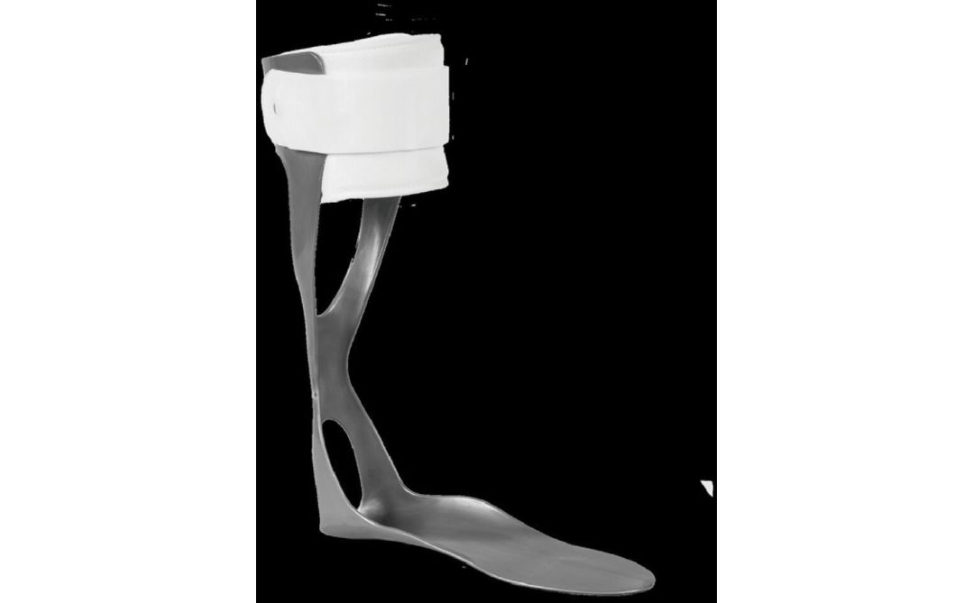
This can be anything! It could be something you have never seen. It doesn’t really matter. Chances are that the examiner also didn’t know before the start of the exam. Stick to the below principles and you will impress any examiner. Start describing the part of the body it supports such as AFO, KAFO, etc. In the 1960s the American Academy of Orthopaedic surgeons suggested standard reproducible terminology of orthoses. Described by the joint or region of the body it encompasses.
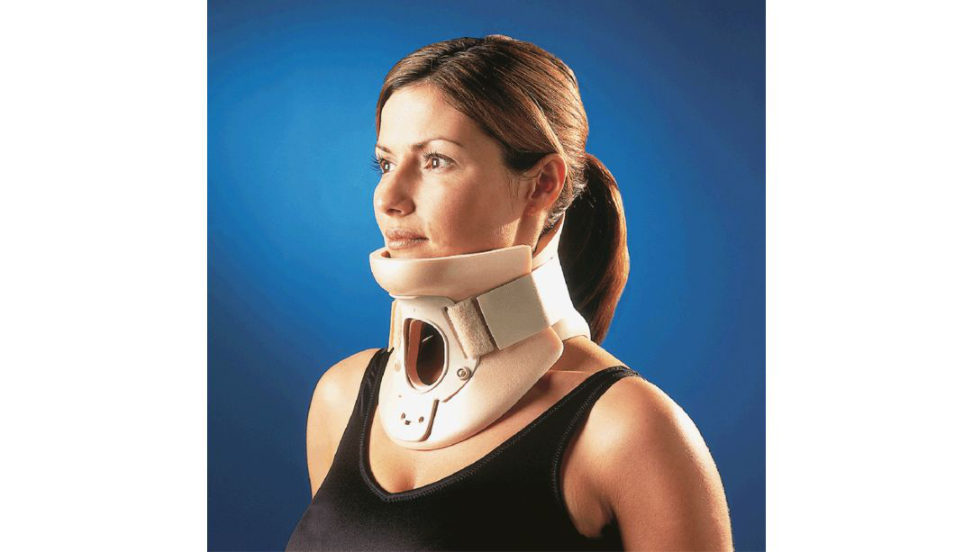
Figure 22.1a Orthosis (courtesy of Blatchford).
Figure 22.1b Plastic foot drop splint (courtesy Blanchford).
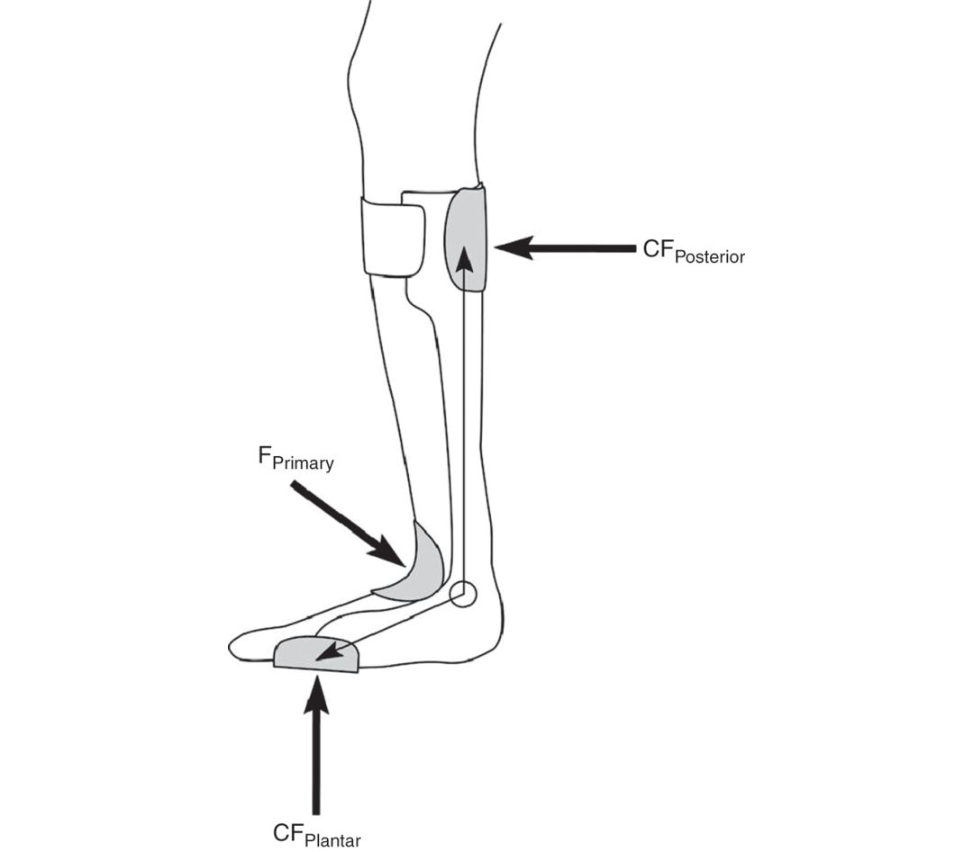
Figure 22.1c Three-point pressure principle for an orthotic.
Figure 22.1d Lightweight carbon fibre AFO (courtesy of Steering Group).
Hence:

Then describe whether it is corrective or accommodative.
Then describe whether it is static or dynamic.
Then describe the materials it is made from.
[Shows a photo] What can you see and can you explain how it works?
This is a GRAFO (ground reaction ankle and foot orthosis). Ground reaction force (GRF) is a force that is exerted by the ground on the body. It is equal in magnitude but opposite indirection to the force exerted on the ground by the body. This is based on Newton’s third law; for every action, the reis an equal and opposite reaction. Therefore, by controlling distal joints one can alter the GRF and affect more proximal joints. The concept of affecting one joint by the position of another is called coupling. GRAFO is formed from a toeplate and rigid ankle in neutral position, and a rigid anterior tibial shell. It provides knee supports for patients with weak quadriceps and gastrocsoleus by accentuating knee flexion and preventing knee hyperextension in midstance. By fixing the angle of the ankle the
GRF can be positioned anterior or posterior to the knee joint to encourage either flexion or extension.
What is functional bracing?
This was advocated by Sarmiento from the USA. In a review paper he published in the BJJ in 2006, he described how his technique has evolved. He believes that rigid immobilization of fractures of long bones is unphysiological, and that movements at the site of fracture during functional activities encourage osteogenesis. The principle is to stabilize the fracture while allowing weight-bearing and joint movements. Motion a t the fracture site is prevented through circumferential compression of the soft tissues.
[Shows a photo] Tell me about these orthoses.
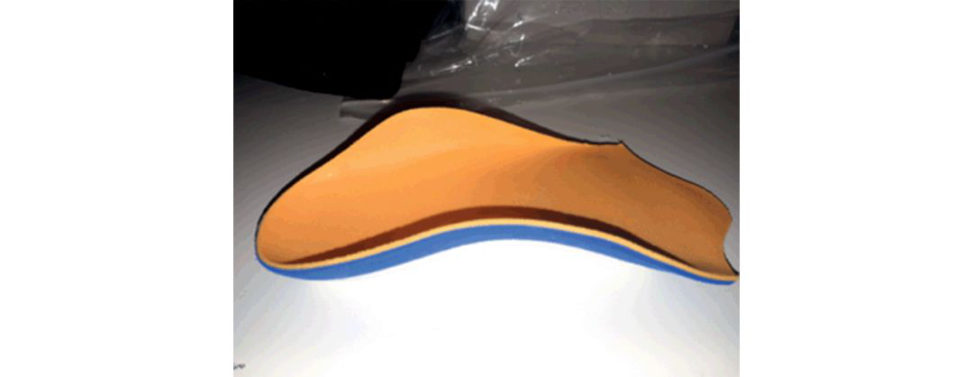
The first one is UCBL (University of California Biomechanics Laboratory) (Figure 22.1e). It is a rigid plastic insert that is fabricated over a cast of the foot with rigid and high posterior, medial and lateral walls to provide a deep cup. It is used to control severe hind foot valgus and midfoot pronation. The second one is a Boston brace (Figure 22.1f), this is used to treat paediatric scoliosis. It is custom-made and works on the principles of three-point fixation. Theb oft om partis fixed around the pelvis, and the top part has raised sides for improved sideways support to avoid lateral shift of the spine. Extra padding can also be used incertain areas to help improve the corrective forces. The third one is aChar cot restraint orthotic walker (CROW) (Figure 22.1g), which is used in the end-stage foot disease of diabetes.
How can we prevent complications of orthotics?
The principles to minimize orthotic –limb interface pressures are: 1 – Maximize lever arm. 2 – Maximize surface contact area. 3 – Maximize conformity. 4 – Protect bony prominences. 5 – Moist absorbent lining.
Figure 22.1e UCBL.
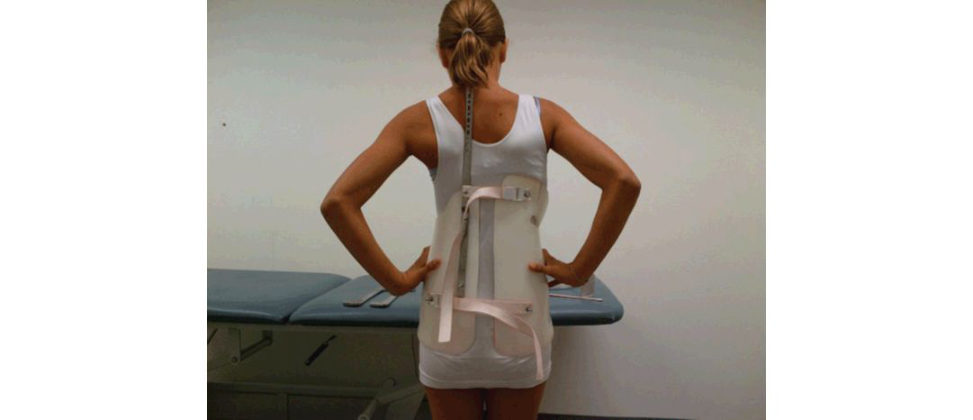
Figure 22.1f Boston brace.
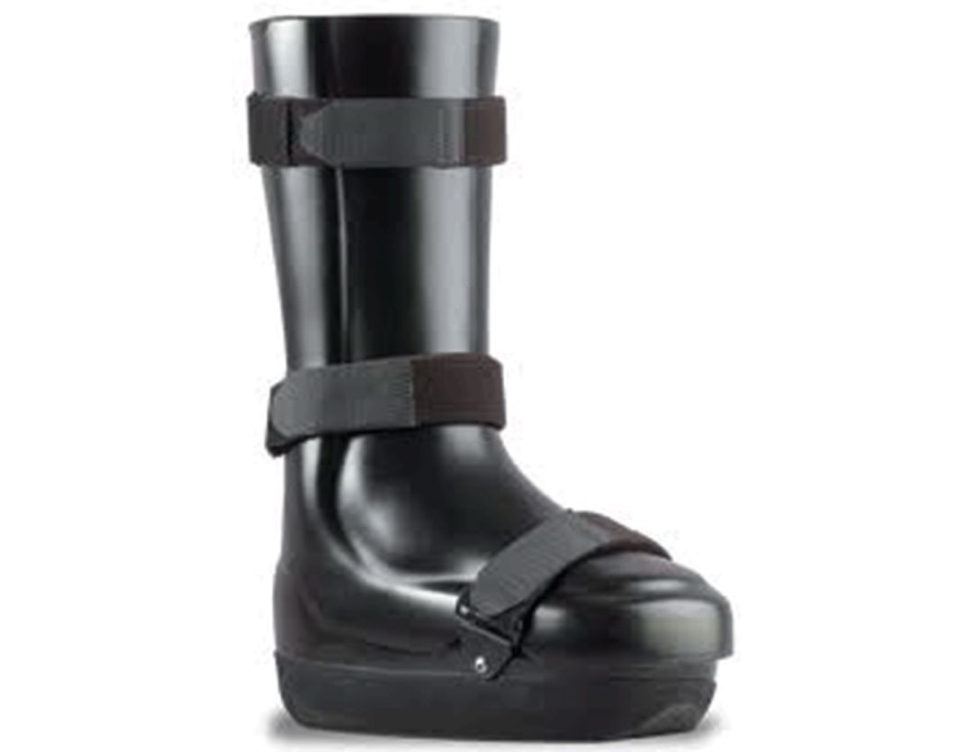
Figure 22.1g Charcot restraint orthotic walker (CROW).
Prosthetics#
[Shows a picture of a below-knee prosthesis (Figure 22.2a)] What is a prosthesis?
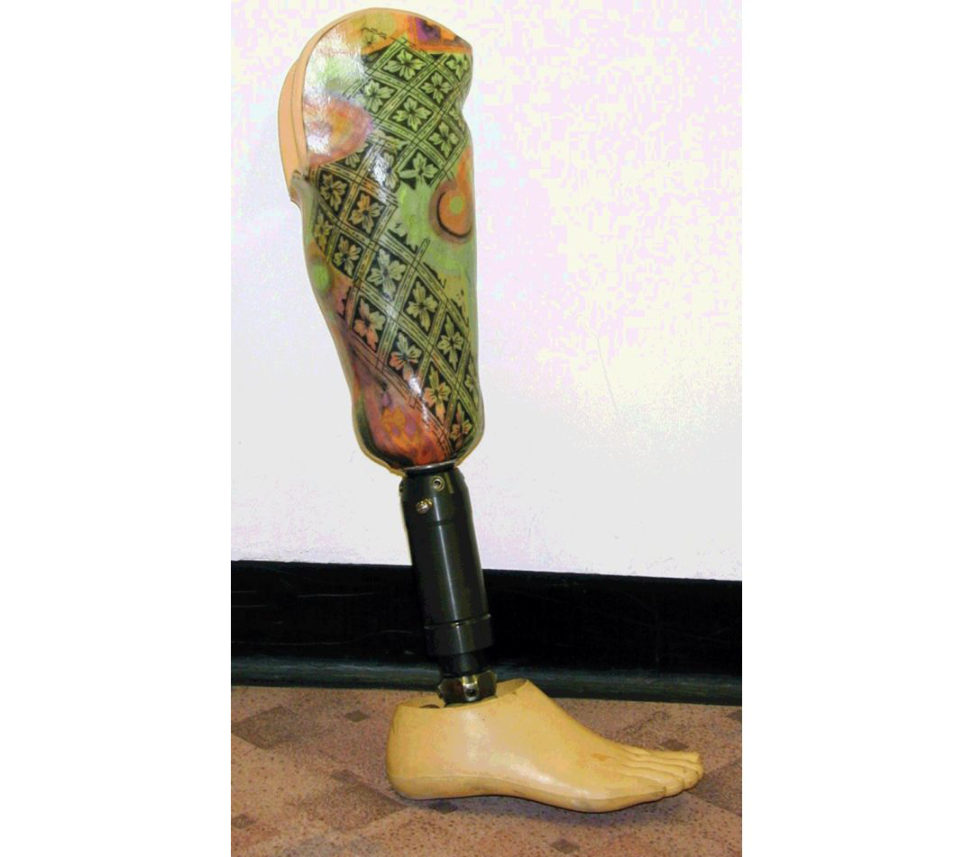
The definition which is endorsed by the International Society for Prosthetics and Orthotics is that a prosthesis is an artificial device that is externally applied to replace the function or appearance of part of the body.
How can you classify prostheses?
Prostheses can be classified according to structure into exoskeletal or endoskeletal. Exoskeletal ones have the strength in the rigid external structure, whereas endoskeletal ones are linked by internal struts and covered with external cosmetic.
Can you describe this prosthesis?
As a candidate describes each component, the examiner may then ask for further details to check the candidate’s in-depth understanding and give her/him a higher score. The good candidate who scores 7 and 8 is the one who volunteers relevant information without being asked, hence sending the examiner into a semi-snooze state. 1 – The suspension system that attaches the prosthesis to the residual limb. This can be a belt, straps, or a suction device that has a one-way valve which expels air when the socket is donned. Some systems use the bulbous shape of the stump for suspension. 2 – The socket which is the connection between the stump and the prosthesis, and is custom- made to the stump shape. Silicon is commonly used here as it provides an airtight seal between the prosthesis and amputated stump due to the pressure differential between the socket and atmosphere. Weight-bearing areas for the socket include the heel pad, transtibial, patellar tendon, lateral tibial flare medial tibial flare, transfemoral and ischial tuberosity. 3 – The shank, which is a link between the socket and the terminal device, and also serves to restore length. May be made of metal or carbon fibre. This link can be described as articulating or non-articula ting based on the presence of a joint mechanism. 4 – The terminal device. This can be a hand or a foot, and is described as static, which is more cosmetic, or dynamic, which is more functional. The foot terminal device can be described as energy-storing or non-energy-storing. 5 – Cosmetic c over.
How is the load transferred from the prosthesis to the limb?
There are two types of load transfer; direct and indirect.
Direct load transferor end-weight bearing is accomplished with knee disarticulation or ankle disarticulationS yme’s). Intimacy of the prosthetic socket is necessary only for suspension.
Indirect load transfer is when amputation is performed through a long bone (BK Aor AKA) and the end of the stump does not take all the weight and the load is transferred indirectly by the total contact method. This process requires an intimate prosthetic socket fit.
What are the different types of knee joint mechanism?
This can be single-axis, which has the advantage of being lightweight, or polycentric with four bars linkage and a moving centre of rotation that provides controlled flexion during the gait cycle – this is good for longer residual limbs. There is also the hydraulic knee, which allows variable cadence via a piston mechanism and is suitable for shorter residual limbs inpatients with higher activity levels. Or simply a manual locking knee, which consists of a constant friction knee hinge with a positive lock-in extension that can be unlocked to allow function – this is used primarily in weak, unstable patients and those just learning to use prosthetics and for blind amputees. The new design development includes a microprocessor-controlled knee plus a motor. Battery life, weight and cost are significant limiting factors.
[Shows a picture of a foot prosthesis] Can you describe these two prostheses to me and explain the difference?
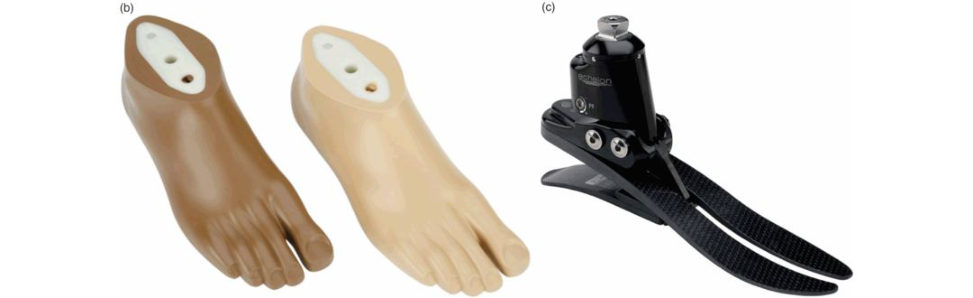
The first photo is of a solid ankle cushioned heel, so-called SACH prosthesis (Figure 22.2b). This is a non-energy-storing device used for patients with low activity levels as it is light inweight, cost-effectiv e and requires litile maintenance. It can lead to overload on the non-amputated limb and therefore has been replaced by a single-axis foot, which is based on an ankle hinge that provides dorsiflexion and plantar flexion. The second photo is of an energy-storing non-articula ting foot prosthesis (Figure 22.2c). It is made of carbon fibre. The components are compressible, which provides some energy return. The third photo is of an energy-storing and articulating hydraulic prosthesis. It allows inversion, eversion and rotation of the foot and is useful for walking on uneven floors. There is also a motor-powered ankle that has rechargeable batteries and is controlled by a microprocessor. These reduce the energy requirements of walking, but are heavy and costly.
[Shows a photo of a below-knee prosthesis] What are the most common complications of this prosthesis? And how do you prevent them?
One of the most common complications is pis toning, which can occur during the swing phase due to ineffective suspension or during the stance phase due to poor socket fit or stump volume changes. The shear forces from pistoning can cause skin damage and can make the prosthesis feel heavier.
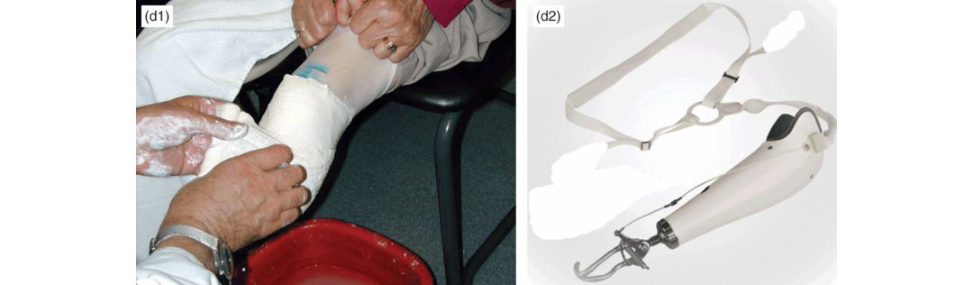
Another common complication is skin damage blisters and ulcers. To avoid these, a plaster of Paris mould is made by the prosthetist to mark the pressure-sensitiv e and pressure-relieving areas which are to betaken into account when the prosthetic is being fashioned, trying to minimize the pressure through unprotected bony prominences (Figure 22.2d). More recently, computer-assisted technology is used to map the stump.
It is important to try to maximize the surface area through which the forces are applied from the orthotic to the skin and to maximize the conformity between the orthotic and the underlying limb .
The material at the interface should also be moisture-absorbent to avoid maceration of the skin.
[Shows a photo of an upper limb prosthesis] What do you see (Figure 22.e)?
This is an upper limb prosthesis, it looks to be a functional one and is body -powered as it has a figure-of-eight harness.
What different types of upper limb prostheses do you know of (Figure 22.2f)?
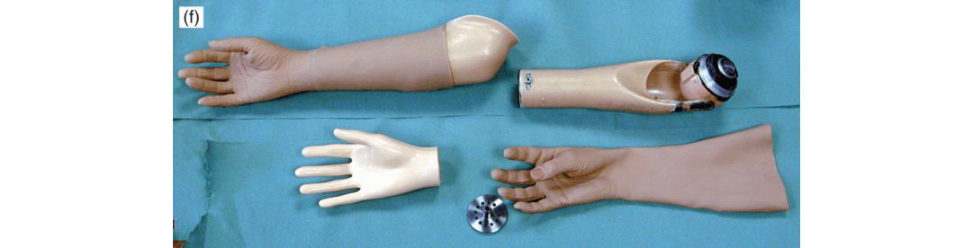
Upper limb prostheses can be cosmetic, functional or myoelectric. The cosmetic ones are passive with no moving parts, but can have some function such as turning a light on. They also improve gait symmetry. Functional prostheses can be body-powered, activated by shoulder movements via a harness and cables; these tend to have poor cosmesis. They also can be myeoelectric, which are powered by muscles sending signals via attached electrodes to the prosthesis. These signals are magnified and passed to a microprocessor to operate the terminal device. These prostheses are heavy and therefore best-suited fortrans radial amputations. They also require maintenance and training, but provide better cosmetic appearance and tend to be more functional with better movements. The terminal device can be a split hook body-powered device.
Figure 22.2a Prosthesis.
Figure 22.2b and 22.c Solid ankle cushioned heel and energy-storing non-articula ting foot prosthesis.
Figure 22.2d Plaster of Paris mould.
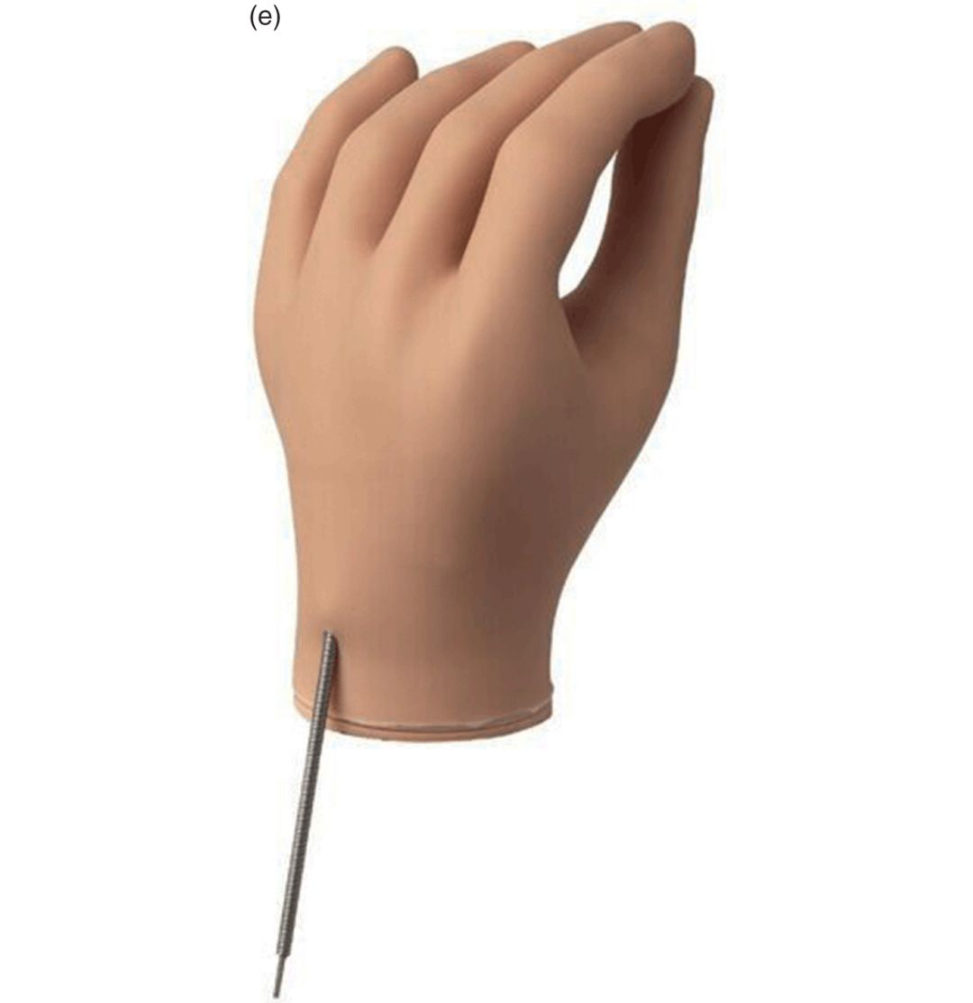
Figure 22.2e Upper limb prosthesis.
Figure 22.2f Upper limb prostheses.